After a long time without conferences, this year, the Traverse Research team will be traveling to the SIGGRAPH 2022 conference in Daegu, Korea! While we’re there we’ll happily talk to folks about the projects we have going on and it will be one of the first times we’re more publicly showing some of the things we’ve been doing over the last three years 🥳.
If you’re there and interested to see a demo of what we’ve built, or just want to say hi, please reach out over Twitter, Mastodon, or through the website.
The Breda framework
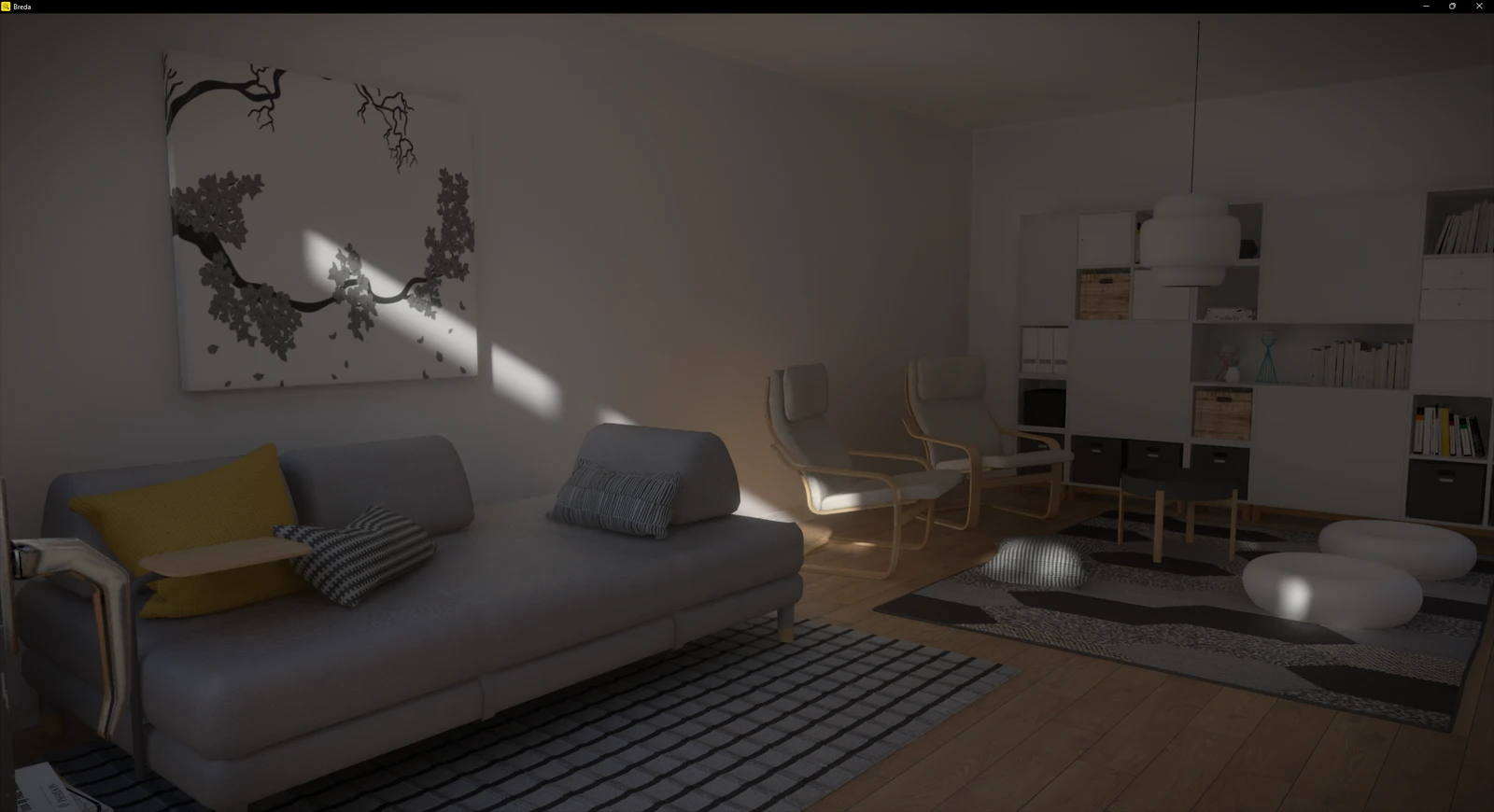
Our Breda prototyping framework has been updated to include a host of new features, including a brand new Global Illumination system based on available hardware accelerated ray-tracing, a complex multi-layer material model, and a bespoke machine learning inference engine.
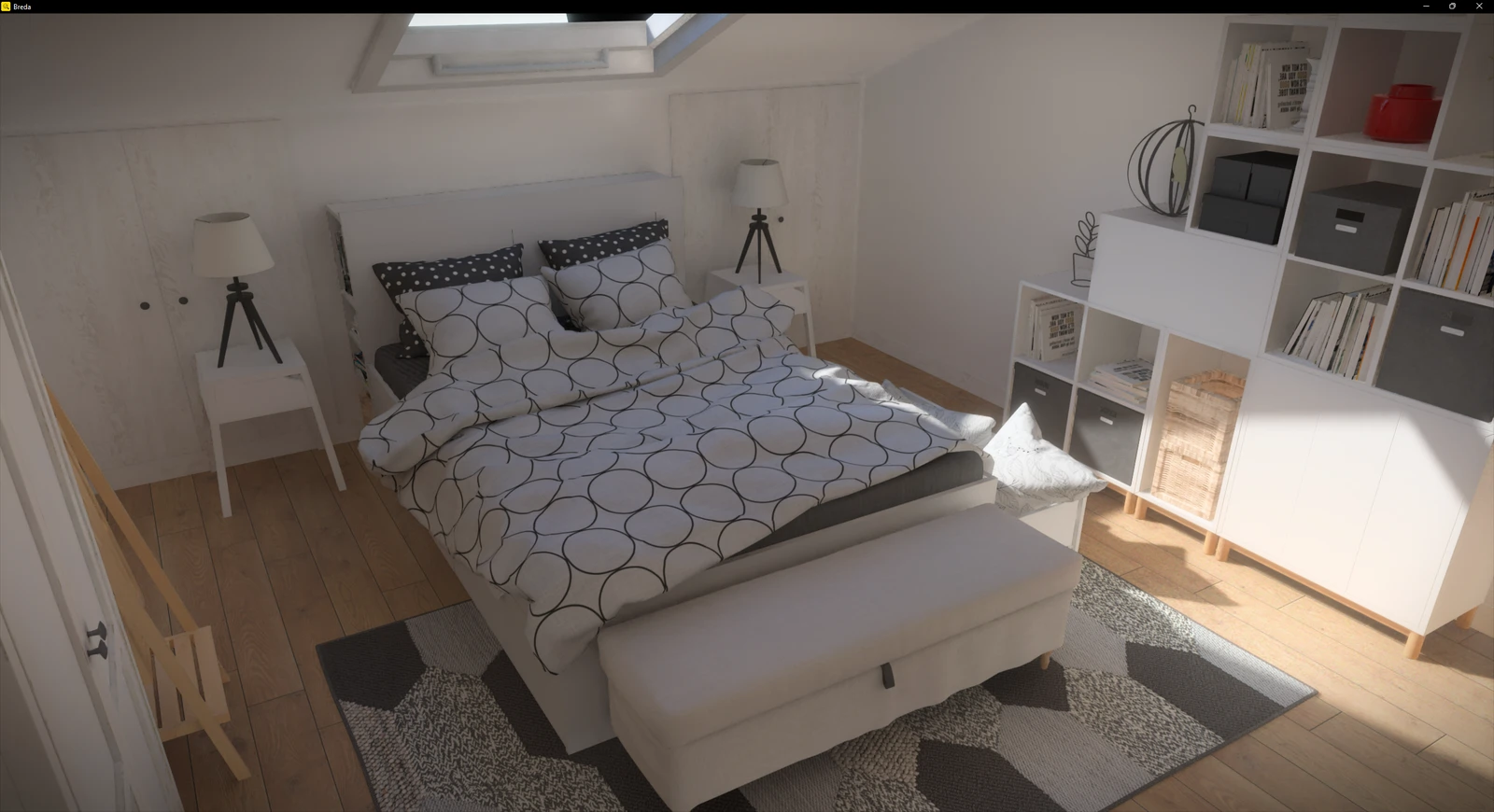
The framework is primarily developed as a research vessel to help drive our advanced graphics research forward. The framework currently runs on Windows, Linux (AArch64 as well as x64), and Android; it supports both Vulkan and Directx12. It is capable of running in pre-silicon environments that support hardware ray-tracing and bindless rendering.
We run through our frames fully deterministically, verified to the last bit and it’s capable of running both forward looking and current gen game-like workloads. Additionally, we have a whole host of features useful to test driver implementations:
- Including acceleration structure host and on-device build support
- Headless rendering support
- And support for our rendering techniques in both inline ray tracing as well as PSO-based ray tracing.
We test and verify all pull requests that go into our main branch for determinism as and we run them through our stack of graphics unit-tests.
Ray tracing acceleration structure expertise
Over the last few years, we’ve built up a lot of ray tracing expertise that we’ve used to help hardware vendors improve their driver implementations. And with the arrival of Jacco Bikker, we’ve really stepped this into a new gear!
Jacco Bikker @[email protected] on Twitter: "Happy to announce that tomorrow will be my first day at @TraverseBreda! Looking forward to doing R&D with @JasperBekkers and friends - many of them former students. I'll be old, but wise. I hope. pic.twitter.com/LghoxZZpvC / Twitter"
Happy to announce that tomorrow will be my first day at @TraverseBreda! Looking forward to doing R&D with @JasperBekkers and friends - many of them former students. I'll be old, but wise. I hope. pic.twitter.com/LghoxZZpvC
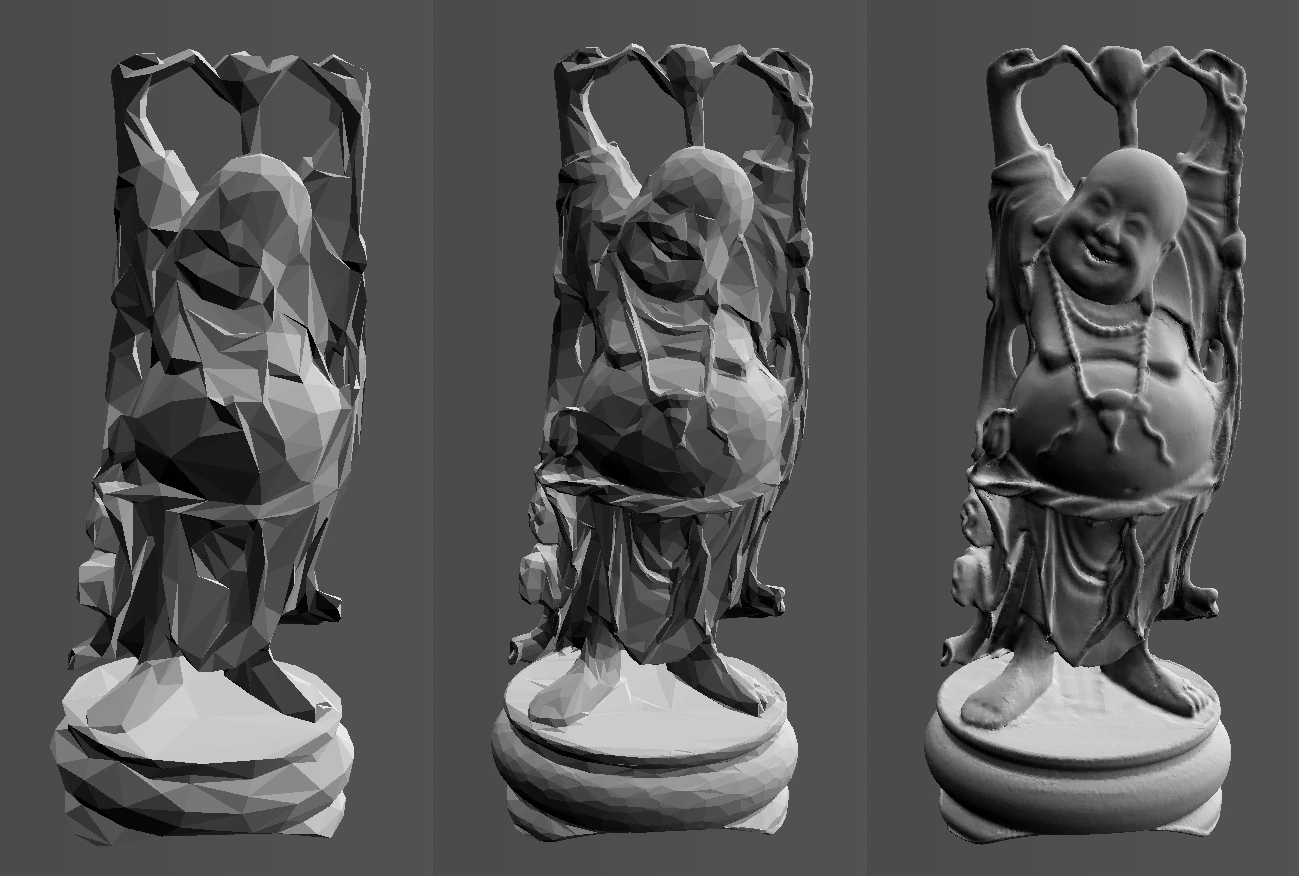
We’ve built up an Acceleration Structure Playground to help us test out a whole suite of algorithms for both building and traversal with lots of debug modes and features. This includes various styles and types of builders, CPU-based validation modes, and extensive statistics gathering.
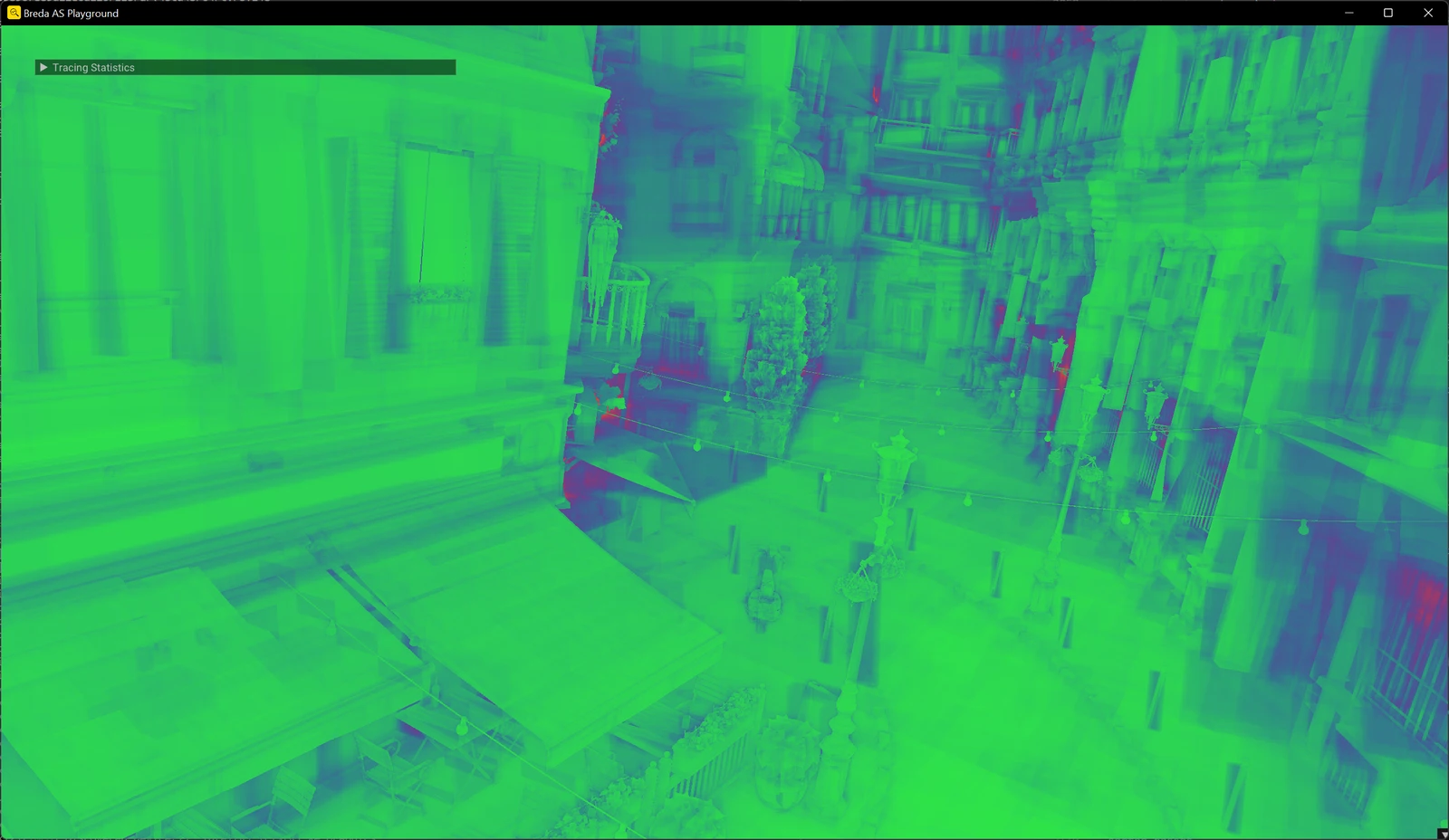
One of the debug visualizations in our Acceleration Structure Playground that shows an intersection cost heat-map
Game development
Traverse Research and Embark Studios have a history together that goes back to way before either company was founded and we’ve been helping them build out their creative platform vision ever since the beginning of Traverse Research! Embark has recently announced that they’ve opened up for early players to help build a small community around their project.
Embark’s Creative Playground: Call for Early Players
We’re having an amazing time helping them ramp up and get going on this project and we feel that it’s important to the Traverse Research DNA to keep working on these kinds of game projects alongside all of the great research that we’re doing; it’s both a great change of pace and it keeps us honest about the kind of work that we do!
Another project that we’re very proud of doing together with Embark is rust-gpu; a project that builds an entirely new compiler backend for the standard Rust compiler that targets running on GPUs through SPIR-V.
Machine learning
The real reason we came to Daegu; we're presenting a poster that tries to answer the question “what if we replaced the BRDF with a machine learning approach”. This question has been studied by one of our Machine Learning Researchers: Luca Quartesan.
In his research dubbed “Neural Bidirectional Texture Functions Compression and Rendering”, Luca trained neural networks to express an equivalent of a BRDF evaluation learned from captures from a collection of light and view directions.
Initially implementing his work in Mitsuba to be able to compare his results with a generally accepted Ground Truth, Luca has previously blogged about the setup he used to get some of these things going.
Building Mitsuba0.6 with Anaconda Python bindings on Ubuntu18.04 (Docker)
However, over time we felt a need to show this work running real-time in our interactive path tracer instead. Which has not only led to the creation of our own onnx-based inference engine that’s backed by both Vulkan and DirectX 12; it’s also made it possible to more easily interact with the materials, and to showcase them alongside our regular material model.
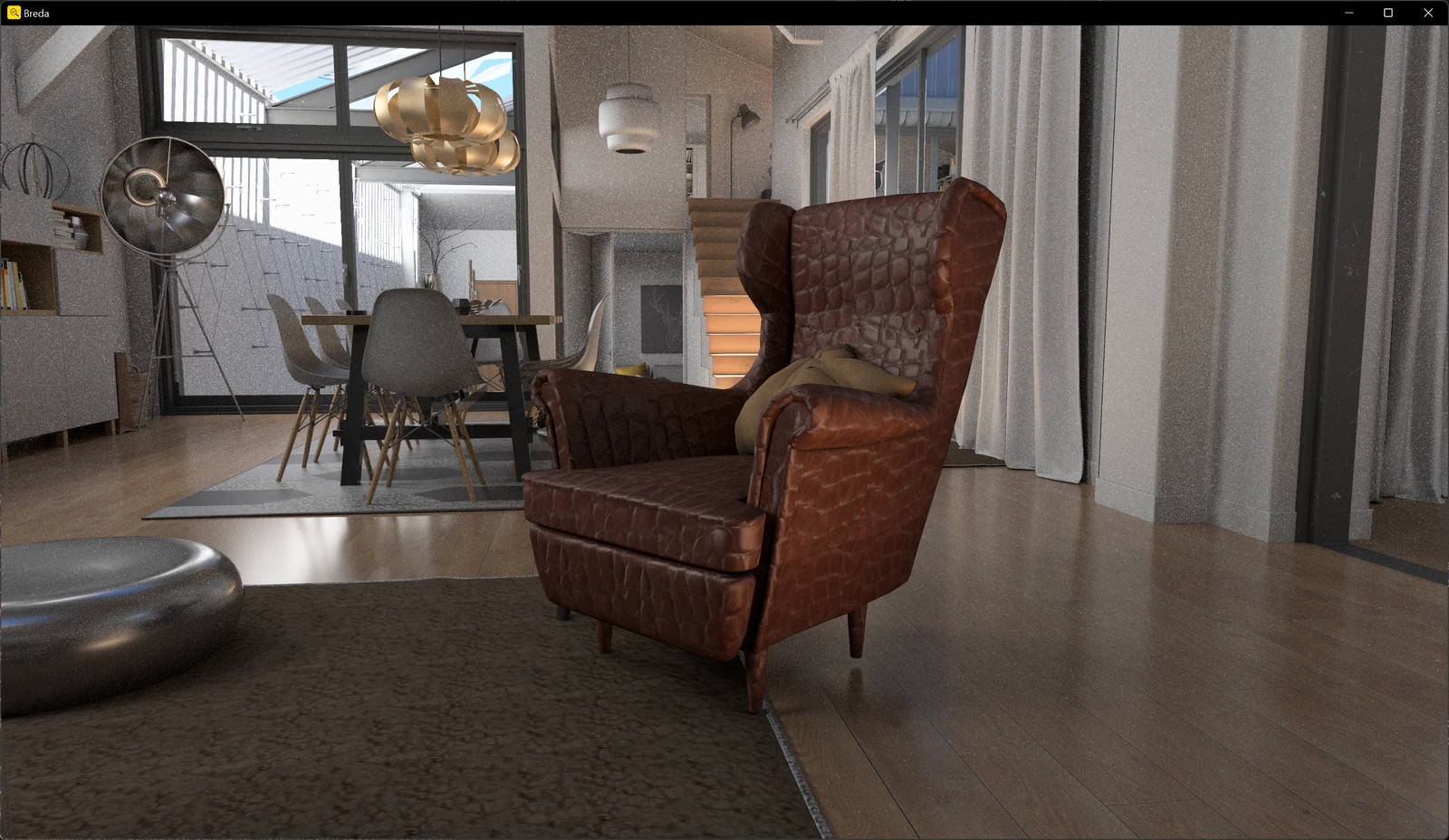
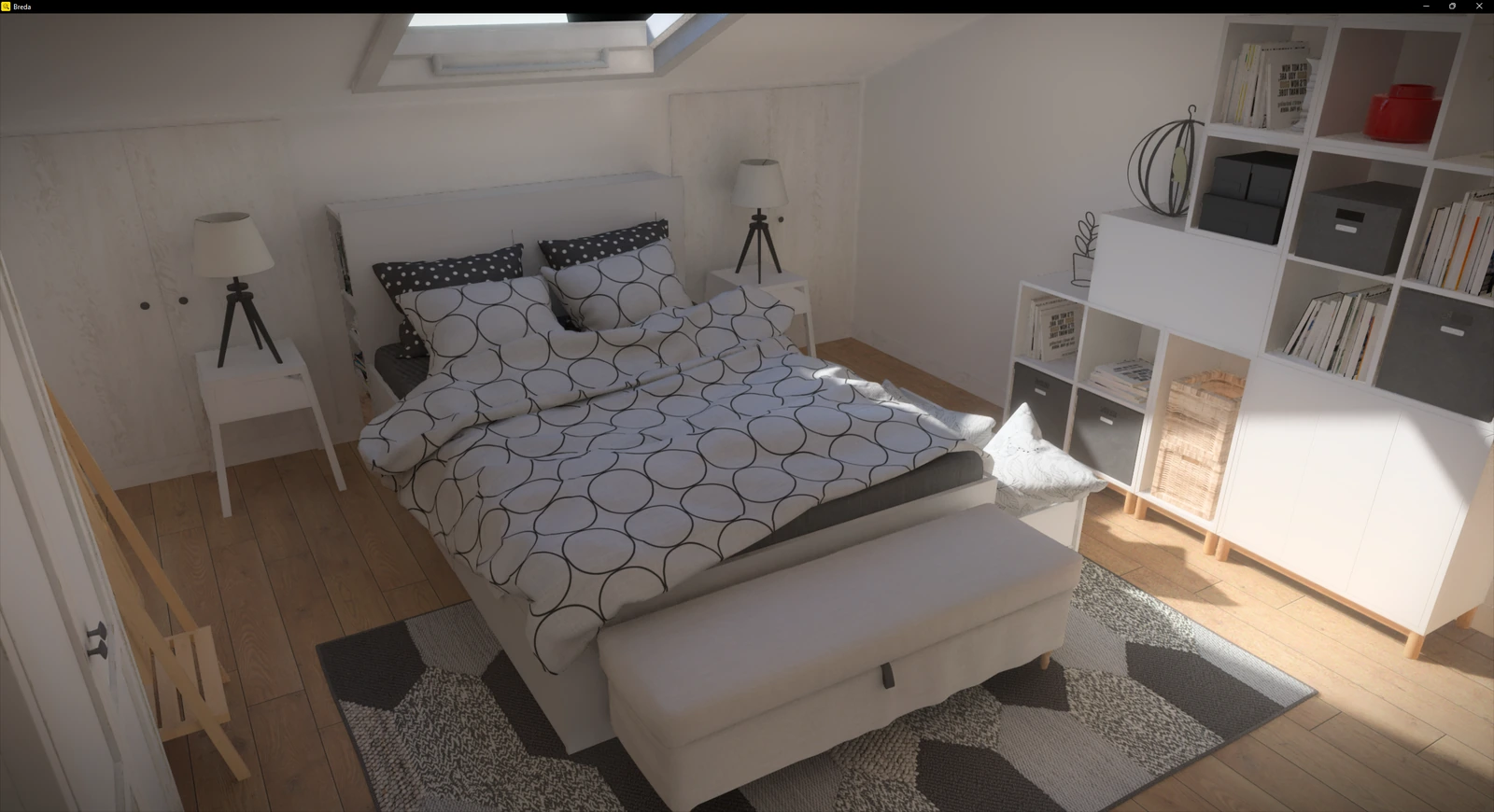
The materials applied to the armchair and the carpet in the foreground feature neural materials trained on captured data from the UBO2014 data-set, and are rendered though our interactive path tracer.
University Engagement
One of the things that we absolutely love doing more than anything is the amount of University Engagement we do. In particular we have a great relationship with the Breda University of Applied Sciences (BUas) and the Utrecht University where we held a very nice session earlier this year together with Pete Brubaker about our use of the ISPC compiler and about low-level SIMD optimizations.
Jasper Bekkers on Twitter: "Very proud to have helped set this up! Kamen and Pete showed a lot about ISPC, how it's used in practice and explained low level details about ISPC and SIMD. Thanks @j_bikker for hosting! https://t.co/9Ec02r88dY pic.twitter.com/UI1UlSB83p / Twitter"
Very proud to have helped set this up! Kamen and Pete showed a lot about ISPC, how it's used in practice and explained low level details about ISPC and SIMD. Thanks @j_bikker for hosting! https://t.co/9Ec02r88dY pic.twitter.com/UI1UlSB83p