
TraverseResearchWork with us
Menu

Traverse Research

Rendering for simulation

Real-time graphics engineering for simulation systems, connecting sensor data flow, image quality and GPU cost.

The connection between sensor data, rendering passes and the simulation system.

The renderer inside a larger system

Simulation rendering has to fit the surrounding application. Visual output, data flow, latency and GPU execution interact with a system whose requirements extend beyond the image alone.

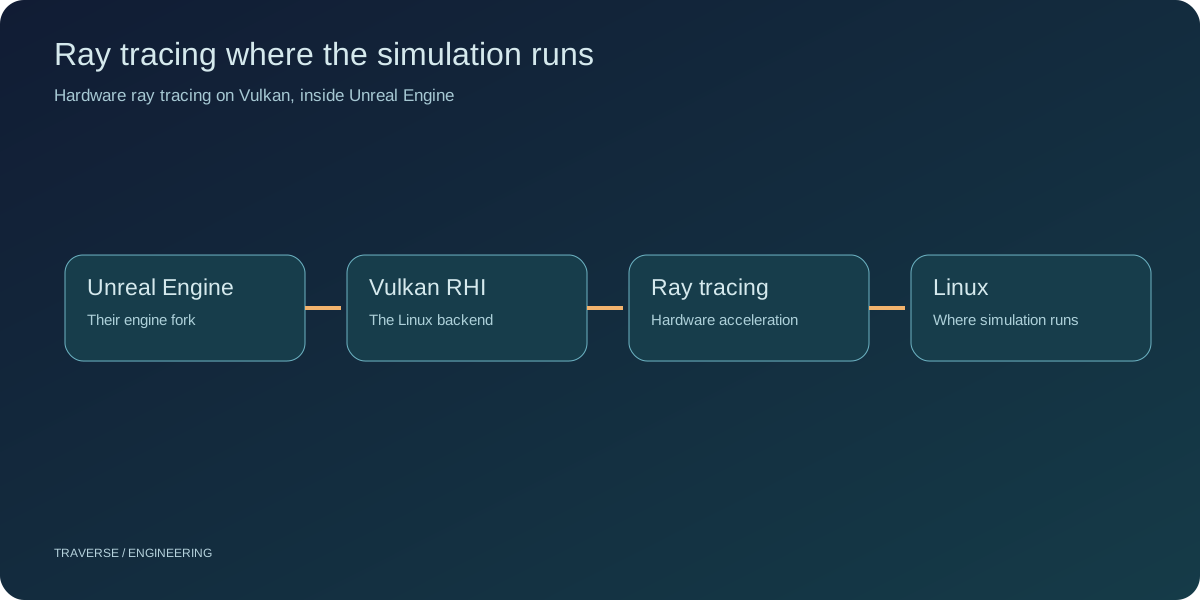
Traverse’s Applied Intuition engagement brought real-time graphics engineering into automotive simulation. The work included LIDAR/RADAR double-buffering, ambient-occlusion techniques and ray-tracing optimisation.

Investigate the actual passes

We investigated reflection-buffer formats, denoiser passes and ray-tracing cost, breaking the application-level problem down into the data and GPU work producing it.

The same discipline applies to other simulation workloads: understand what the system needs, identify the limiting behaviour and review the implementation in context.

Explore the Applied Intuition project.

A few useful answers.

Do you work outside game development?

Yes. Applied Intuition is a concrete automotive-simulation engagement.

Is the work limited to visual demonstrations?

We work on sensor data flow, buffer formats and GPU pass analysis alongside the visual output.

How is the scope established?

We agree the simulation's technical question, target environment and review criteria with the engineering team.

Traverse Research + Traverse Games

Let’s turn a good question into working software.

Start a conversation