
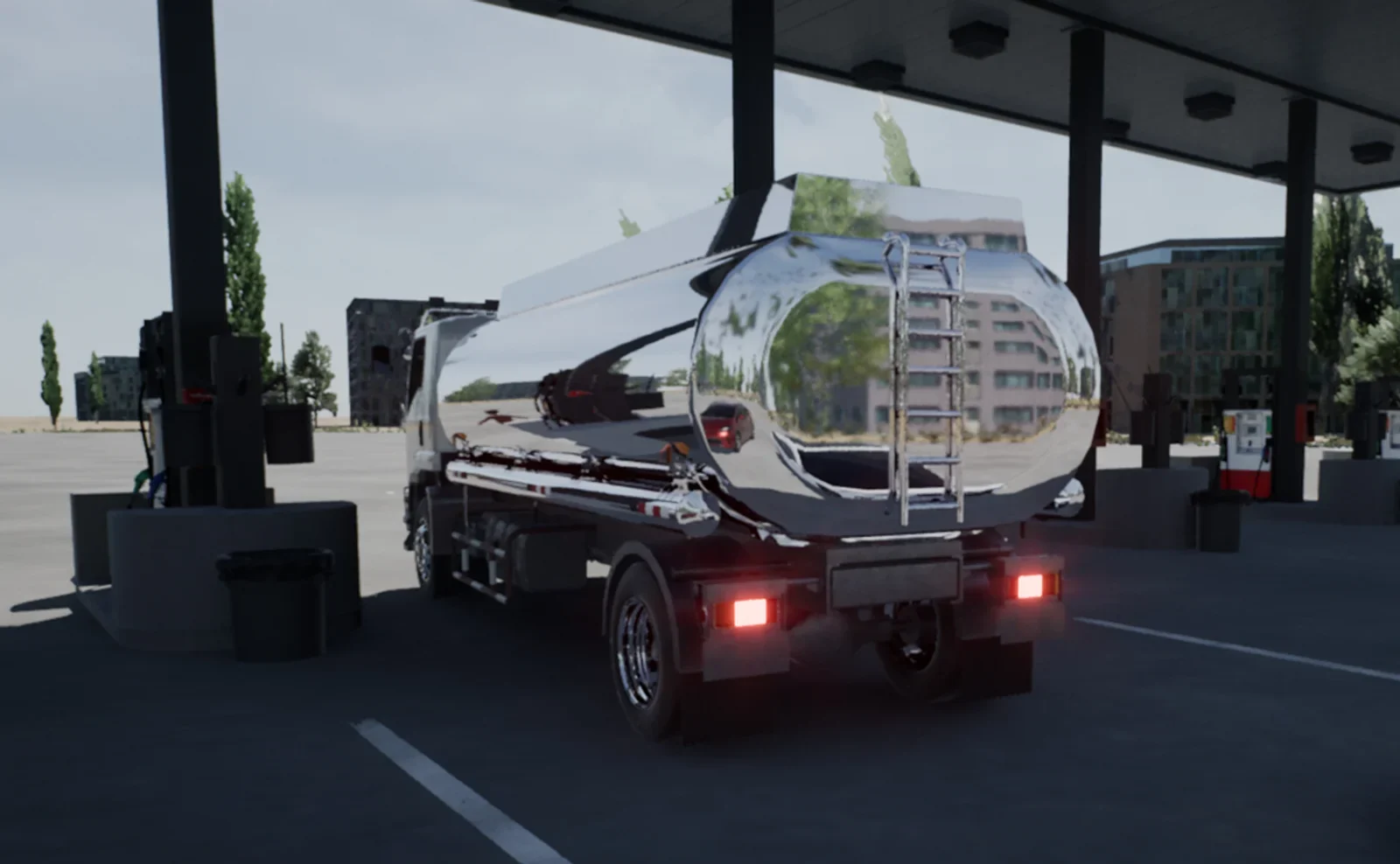
The problem
Applied Intuition build simulation software for autonomous vehicles, and their simulation environment runs Unreal Engine on Linux. That platform choice closed off ray tracing: Unreal’s hardware ray-tracing path was built against DirectX 12 on Windows, and the Vulkan renderer they depended on had no equivalent.
Ray tracing was not something they could adopt by upgrading the engine. It had to be written for the backend and the operating system they actually ship on.
What we did
We implemented hardware ray-tracing support on Vulkan inside Applied Intuition’s Unreal Engine fork. The work sat in their engine, in their build, against the Vulkan renderer that Linux requires.
That is the whole engagement. It was a narrow, deep piece of engine work rather than a broad rendering programme, which is a large part of why it lasted.
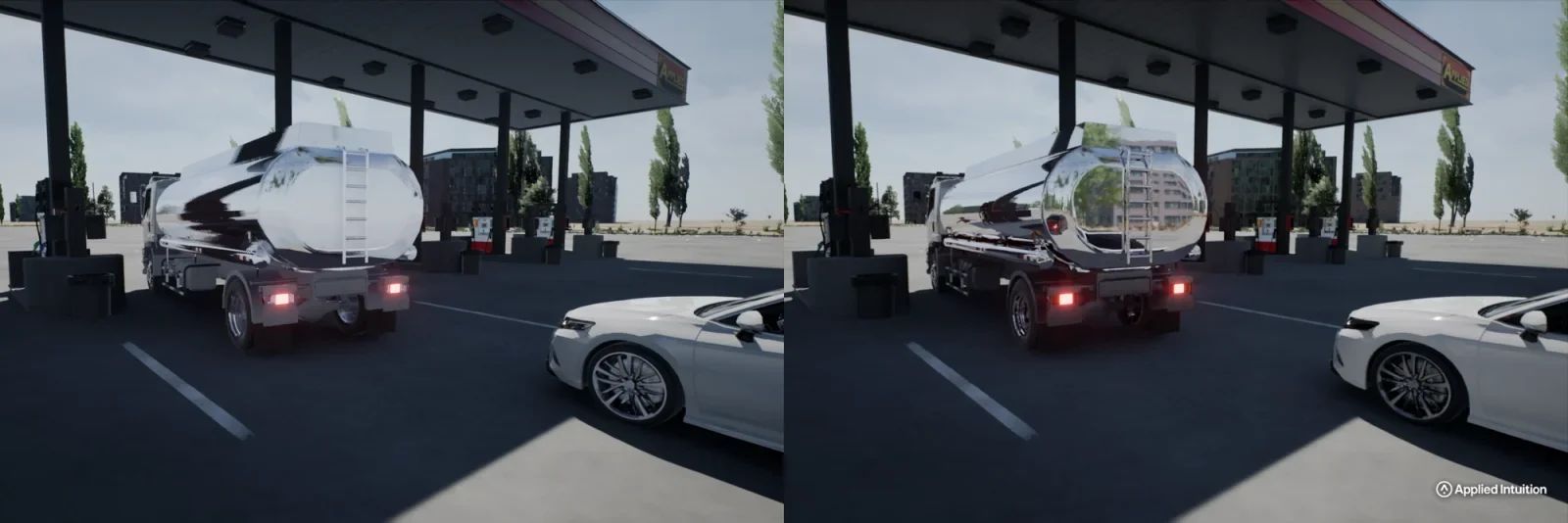
Reflections without and with ray tracing in Applied Intuition's sensor simulation. Source: Applied Intuition, Ray tracing and Vulkan boost sensor data.
Their own write-up explains why this matters for a sensor rig rather than for a viewer: a reflection a camera or radar return depends on has to be there, in the right place, or the perception system is trained against something the real world will not show it.
The result
Traverse Research were a pleasure to work with. The custom Vulkan hardware ray tracing solution they built into our Linux-optimized Unreal Engine branch is still in use years later
Freek Hoekstra, Applied Intuition
Engine work is judged by whether it survives. Ours has been carried through their branch for years, which is the outcome that matters for a fork a team has to keep maintaining.
A named cross-industry relationship
Applied Intuition is also featured in the Rust Foundation’s profile of Traverse, which explores our work across games, hardware and automotive simulation.